
Key Takeaways
- Grocery stores in New York have a real legal duty to keep their aisles safe for you, which means they have to clean up spills without delay.
- Getting evidence right after a resbalón en Nueva York, especially photos of the spill and the scene, is everything for a potential claim.
- A **negligencia** claim in a slip-and-fall case isn’t automatic. You have to prove the store owner knew (or should have known) about the danger and did nothing.
- Your medical bills and any lost pay are the core of the damages you can claim after slipping in a store.
- It’s just smart practice to consult an experienced personal injury lawyer to understand your rights and the actual legal process in New York.
It was a totally normal Tuesday afternoon at a packed supermarket in Astoria, Queens. Maria, a lifelong New Yorker, was pushing her cart through the dairy aisle when her feet went out from under her. A classic **resbalón en Nueva York**, this one from a puddle of spilled milk, sent her crashing to the floor in a mess of pain and confusion. This kind of thing happens all the time, and it perfectly illustrates the legal web of **negligencia** and liability in **derrame en tiendas de comestibles** cases.
El Incidente: Un Derrame Inesperado en Queens
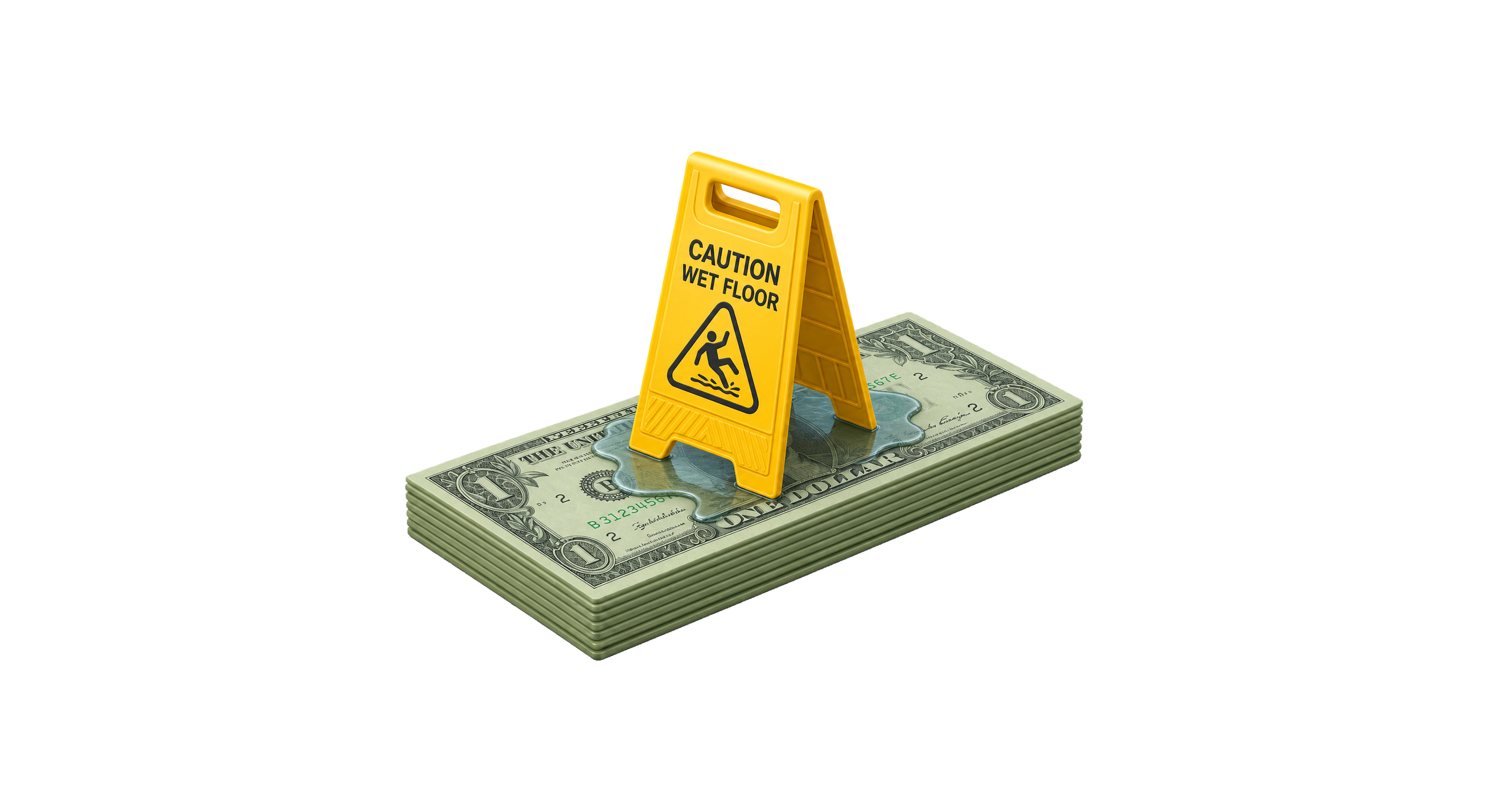
The fall itself was nasty. Maria felt a sharp, shooting pain in her knee and elbow as a supermarket employee rushed over with apologies and a chair. But the damage was done. Even through the shock, Maria had the presence of mind to notice the milky puddle on the floor and, more importantly, what wasn’t there. No “wet floor” cone, no employee cleaning up the mess.
That one detail, the absence of a warning or a quick response, is often what a negligence claim is built on. Store owners in New York, especially places with heavy foot traffic like supermarkets, have a legal duty to keep their premises reasonably safe for shoppers. This doesn’t make them liable for every single fall, but it does make them responsible for hazards they know about or, frankly, should have known about.
¿Resbalón y caída?
Sepa cuánto vale su caso con la Calculadora de Pagos para Caída por Resbalón con IA ¡GRATIS!
Iniciar mi evaluación gratisLa Reacción Inmediata: Recopilando Evidencia
Once the adrenaline wore off, Maria started to feel just how bad her injuries were. Her knee was swelling up and her elbow throbbed. Remembering advice she’d heard, she pulled out her phone and started documenting everything. She took photos of the milk puddle, the surrounding aisle showing no warning signs, and even the products on the nearby shelves. She also got the name of the employee who helped her and asked if a manager was around. She knew, even in pain, that evidence was everything.
This was the right move. In my experience, visual evidence you get right at the scene is invaluable because it freezes the moment in time. Photos and videos can show the exact floor conditions, the lighting, and the presence (or absence) of warnings. Without them, the supermarket’s defense will almost certainly argue the spill just happened and they had no time to clean it, or that Maria was simply not paying attention. It becomes a “he said, she said” fight that hard evidence can win for you.
El Proceso Legal: Navegando la Negligencia
The next day, Maria’s pain was so bad she ended up in the emergency room at NYC Health + Hospitals/Queens. The diagnosis was a sprained knee and a contused elbow, which meant physical therapy and pain meds. That’s when she decided she needed legal advice and called a personal injury firm in Lower Manhattan that a friend had recommended.
Any slip-and-fall case comes down to the legal concept of negligencia. To win, Maria’s lawyer would have to prove four things:
- Deber (Duty): The supermarket had a duty of care to her as a customer. This is almost a given for a retail store.
- Incumplimiento (Breach): The store breached that duty by failing to keep the premises safe, either by not cleaning the spill promptly or not warning people about it.
- Causalidad (Causation): The store’s failure directly caused Maria’s injuries. In other words, if the spill wasn’t there, she wouldn’t have fallen and gotten hurt.
- Daños (Damages): Maria suffered actual harm because of her injuries (medical bills, lost income, pain and suffering).
Maria’s lawyer got to work, sending a representation letter to the supermarket and its insurance carrier, demanding all incident reports, surveillance footage, and cleaning logs for the day of the accident. This is standard procedure. The insurance company will try to downplay liability, sometimes claiming the spill never existed or that Maria was at fault which is exactly why the evidence she gathered was so important.
La Lucha por la Información: Descubrimiento
The “discovery” phase of a lawsuit can feel like a long slog. Maria’s legal team submitted interrogatories (written questions) and scheduled depositions (oral testimony under oath) for the supermarket employees. They were digging for answers. How long was the spill on the floor? What are the store’s cleaning policies? Were those policies followed that day? Were there security cameras in the dairy aisle?
It turns out the supermarket’s own surveillance footage, which they produced after a court order, was the smoking gun. The video showed the spill had been on the floor for at least 45 minutes before Maria fell. You could see several employees walk right past the area without noticing it or taking any action. This was damning proof of the supermarket’s negligencia.
People often think personal injury cases are simple. They’re not. They take a ton of investigation, patience, and usually a serious fight with the other side. Companies don’t just roll over, and their insurers are trained to pay as little as possible. That’s just the reality of it.
| Aspecto | Incidente de María (Astoria, Queens) | Reclamo General de Resbalón y Caída |
|---|---|---|
| Ubicación del Accidente | Astoria, Queens supermarket | New York grocery store |
| Causa del Resbalón | Unmarked milk spill | Food spill, unwarned hazard |
| Tiempo del Derrame | At least 45 minutes on floor | Known or should be known by store |
| Evidencia Clave | Client photos, no cone, security footage | Photos of the spill and scene |
| Lesiones Reportadas | Sprained knee, elbow contusion | Medical bills, lost wages |
| Base Legal | Supermarket’s negligence | Proving owner’s negligence |
Evaluando los Daños: Más Allá de las Facturas Médicas
Maria’s injuries kept her from her work as a freelance graphic designer for several weeks. That meant a serious loss of income on top of the mounting medical bills. Her lawyer worked with her to document every single expense, from the cost of physical therapy to co-pays for doctor’s visits and prescriptions.
But “damages” in an injury case go beyond just the economic costs. They also cover dolor y sufrimiento. So how do you put a price on that? There’s no magic formula, but we look at how the injuries affect a person’s daily life, how long the pain lasts, the disruption to their normal activities, and the emotional toll. Maria, for instance, became afraid of falling in public places which really shook her confidence.
Her lawyer also had to consider the long-term impact of her knee injury. If the pain or limited motion was expected to be permanent, that would be calculated into the demand as “future damages.” It’s a complex evaluation that often requires testimony from medical experts to support.
Negociación y Resolución
Armed with solid evidence and well-documented damages, Maria’s lawyer started negotiating with the supermarket’s insurance company. Their first offer was, as usual, a lowball. The insurer tried to argue that Maria should have seen the spill, invoking a concept called “comparative negligence” under New York’s Civil Practice Law & Rules (CPLR) Section 1411, which allows a victim’s compensation to be reduced if they are found partially at fault for their own accident.
But Maria’s lawyer fired back with the surveillance footage showing how long the spill sat there while employees did nothing. The lack of warning signs was another strong point. After a few rounds of back-and-forth, the insurance company raised its offer substantially. Maria eventually accepted an out-of-court settlement that covered all her medical bills, her lost income, and provided fair compensation for her pain and suffering.
Of course, not every case settles. Sometimes the parties are too far apart, and the case has to go before a jury in a venue like the Queens County Supreme Court. In this instance, though, the evidence was so clear that the supermarket and its insurer decided to avoid the risk and expense of a long trial.
Lecciones Aprendidas de un Resbalón en la Tienda
Maria’s experience offers some direct lessons for anyone who finds themselves in a similar **resbalón en Nueva York** or **derrame en tiendas de comestibles** situation:
- Act Fast at the Scene: If you fall, document everything with your phone’s camera. Get names of any witnesses and employees. Make sure you report the incident to management and ask for a copy of their report.
- Get Medical Attention: Your health comes first. Go to a doctor or an ER. A clear medical record starting from the day of the accident is foundational to your claim.
- Don’t Talk to Insurers Alone: The other side’s insurance adjuster is not your friend. Never give a recorded statement or sign anything without talking to a lawyer first.
- Consult a Personal Injury Lawyer: An experienced attorney can size up your case, handle the negotiations, and fight for the compensation you’re owed. They know New York law and how to make it work for you.
Accidents are a fact of life, but **negligencia** shouldn’t get a free pass. Businesses have a duty to keep their customers safe. When they drop the ball, the consequences for the victim can be life-altering, and the legal system is designed to provide a path to justice.
Maria’s story is a good reminder that even when you feel vulnerable, taking decisive action and knowing your rights can make all the difference. A simple **derrame en tiendas de comestibles** can lead to serious problems, and it’s important to be ready to handle the legal process if you become a victim of someone else’s negligencia.
¿Qué debo hacer inmediatamente después de un resbalón y caída en una tienda en Nueva York?
First thing: use your phone. Take pictures of what you slipped on, the whole area, and the fact that there are no warning signs. Tell a manager right away, ask for an incident report, and get names of any witnesses. Then, go get checked out by a doctor, even if you think you’re okay. You need a medical record that starts on day one.
¿Cuánto tiempo tengo para presentar un reclamo por lesiones personales en Nueva York?
For most personal injury cases in New York, including slip-and-falls, you generally have three years from the date of the accident to file a lawsuit. But don’t wait. There are exceptions and much shorter deadlines for claims against government entities, so you should contact an attorney as soon as possible.
¿Qué tipo de compensación puedo recibir por un accidente de resbalón y caída?
Compensation can cover your past and future medical bills, lost wages from being out of work, and your pain and suffering. In some situations, it can also include damages for loss of enjoyment of life. The final amount really depends on how severe your injuries are and the total impact on your life.
¿Puedo presentar un reclamo si fui parcialmente responsable de mi caída?
Yes. New York uses a “pure comparative negligence” rule. This means you can still recover damages even if you were partly at fault for your fall. However, your compensation award will be reduced by your percentage of fault. So if you’re found 20% at fault, your award is cut by 20%.
¿Necesito un abogado para un caso de resbalón y caída?
It’s not legally required, but it’s a very good idea. A personal injury lawyer will gather the evidence, deal with the insurance companies, make sure your claim is filed correctly, and fight for the best possible compensation. Insurance companies have teams of experienced lawyers. You should have one on your side, too.



