It’s hard to believe, but a shocking 40% of slip-and-fall accidents inside retail stores trace back to one simple cause: wet or slippery surfaces. That number, which comes from a deep dive into insurance claims, reveals a truth many people don’t want to face. A simple resbalón en tienda de Savannah on some pisos mojados can completely upend a person’s life. Are we really paying enough attention to the risk posed by a puddle in a grocery store aisle or a recently mopped entrance?
Key Takeaways
- Wet floors are the cause of 40% of accidents in retail stores, showing just how common this danger is.
- Property owners can be held legally responsible if they fail to put up warning signs for wet floors or don’t perform proper maintenance.
- An experienced Savannah lawyer is your best bet for gathering the evidence you need, like security camera footage and witness statements, to build a strong personal injury claim.
- Georgia law is clear, specifically O.C.G.A. § 51-3-1, which requires property owners to keep their premises safe for visitors.
- If you’re the victim of a slip and fall, you need to get medical attention right away and take pictures of the accident scene to protect your legal options.
El Alto Costo de la Negligencia: 40% de Accidentes por Pisos Mojados
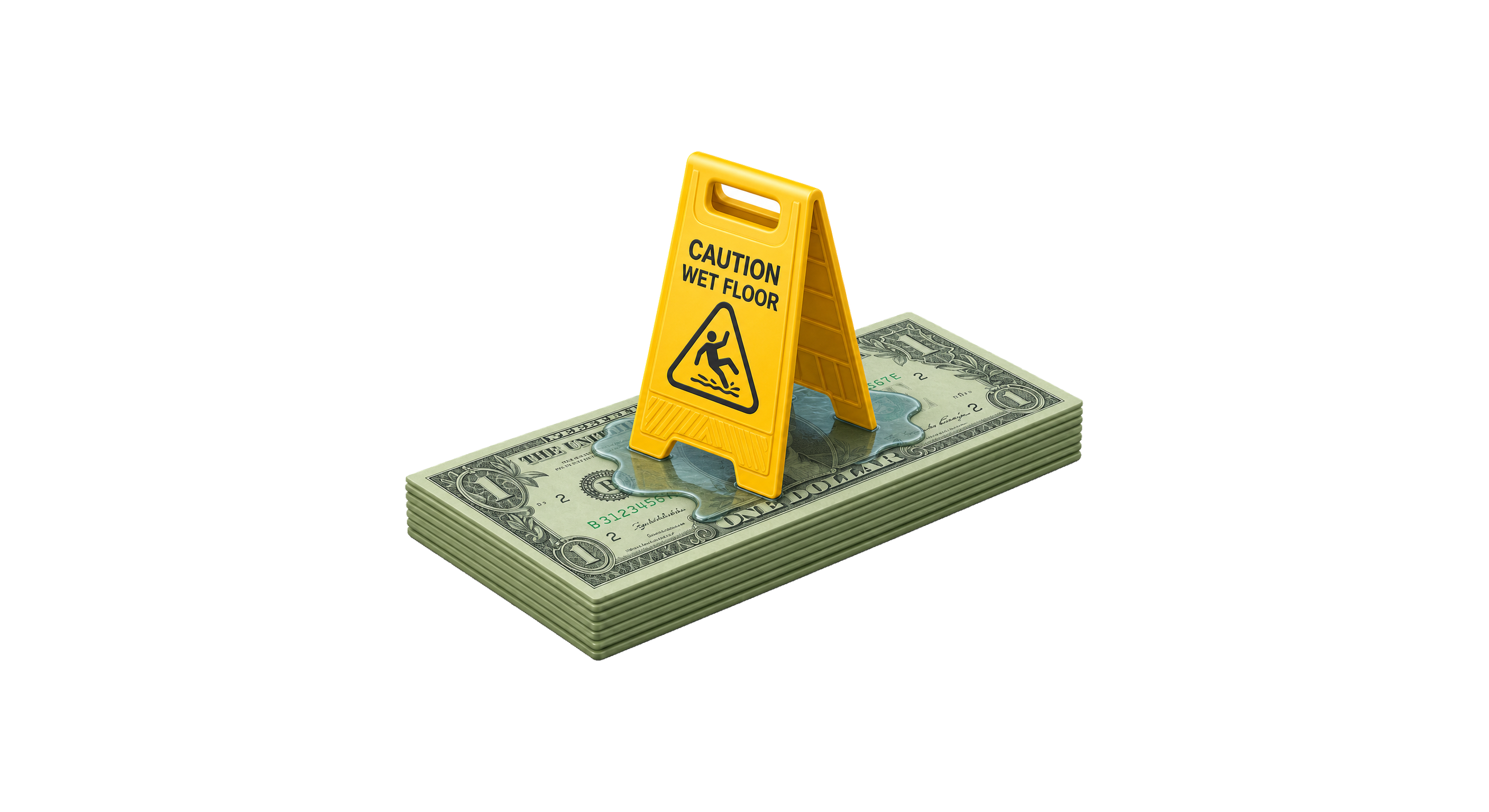
When you think about accidents in stores, your mind probably jumps to things falling from high shelves or cart collisions. The data tells a different story. The hard fact is that 40% of all slip-and-fall claims in retail businesses happen because of wet surfaces. This isn’t just a random statistic. It’s a blaring alarm bell signaling a widespread failure in how stores manage their risks. Think about it for a second, grocery stores, department stores, even restaurants right here in Savannah. The entrance on a rainy day, a spill that isn’t cleaned up for several minutes, or a floor that was just mopped without any signs are all potential traps waiting for an unsuspecting customer.
From what I’ve seen handling these cases, almost every single one of these incidents could have been prevented. It’s no secret that floors get wet. The real issue is the absence of strict safety protocols or, worse, the failure to follow them. Store managers have a direct responsibility under Georgia law, spelled out in the Official Code of Georgia Annotated (O.C.G.A.) Section 51-3-1, which demands that a property owner use ordinary care to keep their premises and approaches safe for invitees. That’s not a friendly suggestion, it’s a legal command, and if a customer slips and gets hurt because of an unmarked wet floor, the store can be held liable for those injuries. We’re not talking about some fluke accident, we’re talking about a failure to exercise basic due care.
¿Resbalón y caída?
Sepa cuánto vale su caso con la Calculadora de Pagos para Caída por Resbalón con IA ¡GRATIS!
Iniciar mi evaluación gratisLa Falta de Señalización: Un Factor en el 35% de los Casos
Here’s another number I find pretty telling: around 35% of slip-and-fall accidents on wet floors could have been stopped with proper signage. That means a simple “Wet Floor” or “Caution” sign might have been enough to prevent a huge number of these injuries. We’re not asking store owners to be psychics. We’re asking them to use common sense and follow basic safety standards. Here in Savannah, with our humid climate and frequent downpours, this is even more pressing. A sudden storm can soak a store’s entrance in a matter of minutes.
When those signs are missing, it’s not just lazy, it also makes it very difficult for the store to defend itself in a lawsuit. A jury in the Chatham County Superior Court, for instance, is going to want to know what, exactly, the store did to warn its customers. If the answer is “nothing,” their defense is in serious trouble. The law expects property owners to anticipate reasonable risks and take steps to deal with them. A wet floor from rain, a spill, or cleaning is a perfectly foreseeable risk. Not putting up a sign is asking for trouble, and there’s really no excuse for it.
El Retraso en la Limpieza: Causa del 20% de las Caídas Graves
The numbers also show that 20% of serious slip-and-fall injuries are directly tied to spills or messes that weren’t cleaned up in a reasonable amount of time. This isn’t just a janitorial issue. It’s a management and training issue. A spilled soda or a broken jar of sauce in a store aisle is more than just an inconvenience. It’s a hazard. When that spill sits there for 10 or 15 minutes without anyone doing anything about it, the store’s liability skyrockets.
I’ve handled cases where the security video footage (which is gold in these claims) clearly shows multiple employees walking right past a spill without taking any action at all. That’s just inexcusable. A store’s policy must be that any spill is reported and cleaned immediately. If no one is available to clean it, the area has to be blocked off or marked with a sign until someone can get to it. Doing nothing is a form of negligence. The injuries from these falls can be life-altering: broken hips, head trauma, debilitating esguinces de espalda. These aren’t “minor” bumps and bruises. These are incidents that can lead to surgery, physical therapy, and a long road to recovery, all while medical bills pile up.
“De acuerdo con la entidad reguladora, hasta la fecha se han reportado unos 54 casos en los que las cerdas metálicas de los cepillos se rompieron mientras se limpiaban las parrillas, adhiriéndose en las superficies de cocción y a los alimentos, haciendo que los consumidores ingirieran los alambres afilados, los cuales causaron lesiones internas graves en algunos clientes.”
La “Sabiduría Convencional” sobre la Culpa Compartida es a Menudo Errónea
There’s a widespread myth, and I hear it even from some lawyers, that the victim in a slip-and-fall case is always at least partly to blame. The argument is always that the person “should have been watching where they were going.” Let me be very clear: in most cases involving a resbalón en tienda de Savannah on pisos mojados, this idea of shared blame is a cheap excuse from the defense and it’s legally flimsy. While Georgia law does have a defense of “modified comparative negligence” under O.C.G.A. § 51-12-33, which can reduce a plaintiff’s award if they’re found partially at fault, it isn’t a get-out-of-jail-free card for a negligent property owner.
It’s completely unrealistic to expect a shopper to be constantly scanning the floor for hidden dangers. When you walk into a store, you have a right to assume the environment is reasonably safe. Your attention is supposed to be on the products, your kids, or your shopping list, not on every single square inch of tile. Now, if a hazard is “open and obvious,” that’s a different story, but a clear puddle of water at a busy entrance or a spill in an aisle often isn’t noticeable until it’s far too late. My experience shows that juries tend to be very sympathetic to victims who were just minding their own business and got hurt by an unexpected danger.
La Importancia de la Documentación Inmediata: Un Factor Crítico en el 90% de los Casos Exitosos
One final number I want to leave you with, and it’s something everyone who suffers a resbalón y caída en Savannah needs to burn into their memory: immediate documentation of the accident scene is present in 90% of successful personal injury cases. This means taking pictures, getting the names of any witnesses, and reporting the fall to store staff right away. It sounds so basic, but in the shock and pain of the moment, people forget to do it.
If you slip and fall on a wet floor, your first priority is your health, so get medical attention. As soon as you can, though, take photos of the puddle, the spill, or the lack of signs. Don’t count on the store to do it for you (they won’t). Get the name of the manager who takes your report. If anyone saw what happened, get their name and phone number. An official incident report from the store can be useful, but they often downplay the important details. In these situations, evidence disappears fast. The water gets mopped up, a sign appears after the fact, and the spill is cleaned. Without your own documentation, proving your case becomes much, much harder. A Savannah personal injury lawyer will rely heavily on this initial evidence to build a strong case for you. Evidence is everything in a negligence claim.
The reality is that property owners have a legal duty to keep their stores safe. When they fail and someone gets hurt, they have to be held accountable. This isn’t about looking for a payday. It’s about making sure victims get fair compensation for their injuries, medical bills, lost wages, and suffering. The law is there to protect consumers, and it’s our job to make sure it’s enforced. The complacency I see from some stores regarding floor safety is frankly alarming. It’s not enough to have safety policies written down in a binder somewhere. You have to actually follow them. It’s not enough to own warning signs. You have to use them. A person’s life can be turned upside down by a single moment of carelessness, and no one should have to carry that burden alone. If you or someone you care about has been hurt in a resbalón en tienda de Savannah, you absolutely must speak with an experienced personal injury attorney as soon as possible. The first consultation is free and it could be the difference between a full recovery and struggling for years with the fallout from a preventable accident.
Preguntas Frecuentes
¿Qué debo hacer inmediatamente después de un resbalón y caída en un piso mojado en una tienda de Savannah?
First, check yourself for injuries and get medical help if you need it. Then, if you’re able, document everything. Take photos or a video of the wet floor, the lack of signs, and anything else that seems important. Report the fall to the store manager, ask for a copy of the incident report, and get the names and phone numbers of anyone who saw it happen. Don’t give a recorded statement or sign anything until you’ve talked to a lawyer.
¿Cuánto tiempo tengo para presentar una demanda por resbalón y caída en Georgia?
In Georgia, the statute of limitations for most personal injury claims, including slip and falls, is generally two years from the date of the accident. That’s laid out in O.C.G.A. § 9-3-33. There are some exceptions and technicalities, though, so it’s a good idea to talk to an attorney right away to make sure you don’t miss the deadline.
¿Qué tipo de compensación puedo esperar por un accidente de resbalón y caída?
Compensation in a slip-and-fall case can cover both economic and non-economic damages. Economic damages are for things you can put a price on: current and future medical bills, lost wages, and lost earning capacity. Non-economic damages are for your pain and suffering, emotional distress, and loss of enjoyment of life. The final amount really depends on how bad your injuries are and how much they’ve affected your life.
¿Necesito un abogado si me caigo en una tienda en Savannah?
Yes, I would strongly recommend hiring an experienced personal injury lawyer. The insurance companies and the store’s defense lawyers are experts at downplaying or denying claims. An attorney can properly investigate what happened, gather the right evidence, handle the negotiations with the insurance company, and, if it comes to it, fight for you in court to make sure you get the fair compensation you deserve.
¿Qué evidencia es important para un caso de resbalón y caída por pisos mojados?
The most important evidence will be your photos and videos from the scene, the store’s incident report, contact information for any witnesses, and detailed medical records of your injuries. Any emails or letters you have with the store or their insurance company are also helpful. It’s also very valuable to get the store’s cleaning and maintenance logs, if possible, to show they were negligent in taking care of their floors.